
Categories
Tags
-
#Ltd.
##AutoTool
#Automotive Tools
##BushingPressKit
#mechanical engineering
##BearingPuller
#precision manufacturing
#Gear Puller
#Industrial Maintenance Tools
#Mechanical Repair
#Quality Assurance
#Taizhou Xinming Technology Co.
#Bearing Puller
#Mechanical Pulling Tools
#Industrial Maintenance
#Precision Tools
#Workshop Equipment
#Tool Manufacturing
#Equipment Repair
#Industrial Tools
#Engineering Innovation
#Mechanical Tools
#Hand Tool Manufacturing
#Bearing Maintenance
#Industrial Repair Solutions
#Tool Design
#Professional Tools
#Pulling Tools
#Repair Tools
#Maintenance Tools
#Hand Tools
#Gear Removal Tool
#Mechanical Maintenance
#Bearing Removal Tool
#Maintenance Equipment
#Vehicle Service
#Bearing Service Tool
#Mechanical Puller
#Automotive Repair Tools
#Repair Equipment
#Custom Tools
#Mechanical Pulling Tool
#Bearing Service Tools
#Tool Engineering
#Forged Steel Tools
#Custom Workshop Tools
#Auto Tool
#Car Maintenance Tools
#Workshop Tools
#Hydraulic Tools
#Automotive Tool Set
#Vehicle Repair Equipment
#Bearing Extractor
#Automotive Repair Tool
#Bearing Removal
#Puller Tool
#Machinery Maintenance
#Hardware Tools
#Taizhou Xinming Technology
#Gear Removal Tools
#Tool Material Quality
#Pulley Removal
#Industrial Tool Design
#Vehicle Maintenance Tools
#Tool Steel
#Automotive Maintenance
#Puller Tool Design
Archives
Choosing the Right Gear Removal Tool for Automotive and Mechani
-
Posted by Sinmen tools - Filed in Arts & Culture - #Workshop Equipment #Mechanical Maintenance #Automotive Repair Tools #Bearing Removal #Taizhou Xinming Technology #Gear Removal Tools #Tool Material Quality #Pulley Removal #Industrial Tool Design - 9 views
Mechanical maintenance frequently involves removing gears, bearings, pulleys, and other components that have become firmly seated on shafts or within assemblies. Pulling these parts out with improvised methods can damage nearby surfaces, distort components, or create unnecessary work. A Gear Puller provides a more controlled approach by gripping a component and applying force along a planned direction. Its suitability depends on construction quality, contact design, access conditions, and the technician's understanding of the assembly being serviced.
Material quality is central to a puller's ability to withstand repeated mechanical stress. Its arms, central screw, connecting elements, and contact points work together during extraction, so each part must be manufactured with its intended role in mind. Suitable steel can provide the strength and toughness needed for demanding workshop tasks, while consistent processing helps maintain dependable contact between moving and fixed components. Forging and machining can contribute to structural integrity and accurate fitting when properly controlled. Buyers should look beyond a polished finish and consider manufacturing consistency, inspection practices, and the supplier's approach to quality control.
Surface treatment also influences the ownership experience. Workshop tools often encounter oil, grease, moisture, and airborne contaminants, making corrosion resistance a useful consideration. Protective finishes can help preserve exposed metal and simplify routine cleaning, although they cannot eliminate the need for inspection and proper storage. Working threads should remain clean and free from debris, and gripping surfaces should be checked for wear or deformation. A tool's long-term condition depends on both its original construction and the care it receives between jobs.
Selecting a suitable model begins with identifying the components that technicians regularly service. Different assemblies can vary in shape, accessibility, mounting arrangement, and resistance to removal. A two-jaw design may provide access where space is limited, while a three-jaw arrangement can offer more evenly distributed contact around suitable components. Neither configuration is universally appropriate. Buyers should compare the tool's jaw shape, opening range, reach, and intended applications with the maintenance tasks described in the relevant service documentation. Choosing a tool because it looks versatile without checking compatibility can create avoidable difficulties.
Purchasing decisions should also account for the quality of product guidance and support. Clear descriptions help buyers understand the tool's intended uses, gripping arrangement, maintenance needs, and limitations. Distributors may also value consistent product identification, practical packaging, and access to replacement components. For workshops that maintain different vehicle types or industrial machines, a carefully selected range of tools may be more useful than a large assortment containing pieces that rarely fit actual jobs. Evaluating the frequency of use and the type of equipment serviced helps keep purchasing decisions grounded in operational needs.
Functional engineering determines how effectively a puller transfers force to the component being removed. The jaws must engage an appropriate surface, and the central screw needs to align with a suitable contact point on the shaft or assembly. When these elements are positioned correctly, force can be applied more evenly and with better control. Poor alignment, unstable gripping, or contact with a fragile edge can lead to slippage and damage. Technicians should inspect the setup before applying force, follow the equipment manufacturer's procedures, and stop if the tool begins to shift or the component does not respond as expected.
Usability matters because extraction work often takes place in confined spaces, among oily parts, and alongside components that must remain undamaged. A practical tool should be straightforward to position, adjust, and remove after the task is complete. Smooth screw movement and clearly identifiable components can make setup easier, while an appropriate handle design can support controlled operation. Gloves, eye protection, and suitable protective measures remain important, especially when a component releases suddenly. Technicians should never extend a handle with an improvised lever or exceed the tool's intended working limits in an attempt to overcome resistance.
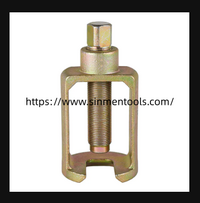
The physical appearance of a puller can reveal useful details about its construction and organization. Evenly finished surfaces, clearly defined edges, orderly joints, and consistent component shapes can indicate attention to manufacturing and finishing. Surface colors and coatings may also help distinguish product types or create a consistent appearance across a tool range. For workshop managers, a case or organized storage arrangement can keep jaws and accessories together, reduce misplaced parts, and make equipment easier to transport between service areas. Visual design is most valuable when it supports identification, handling, and storage rather than serving as decoration alone.
Taizhou Xinming Technology Co., Ltd. manufactures pullers and a range of automotive maintenance and hardware tools, serving customers with different workshop and distribution needs. When evaluating a puller for a particular application, buyers can discuss the components they work with, access restrictions, preferred jaw arrangements, surface finish, and packaging requirements with the company. Reviewing these details before purchasing helps connect tool selection with real maintenance conditions. Information about the company's products and manufacturing capabilities is available at https://www.sinmentools.com/.