
Categories
Tags
-
#Ltd.
##AutoTool
#Automotive Tools
##BushingPressKit
#mechanical engineering
##BearingPuller
#precision manufacturing
#Gear Puller
#Industrial Maintenance Tools
#Mechanical Repair
#Quality Assurance
#Taizhou Xinming Technology Co.
#Bearing Puller
#Mechanical Pulling Tools
#Industrial Maintenance
#Precision Tools
#Workshop Equipment
#Tool Manufacturing
#Equipment Repair
#Industrial Tools
#Engineering Innovation
#Mechanical Tools
#Hand Tool Manufacturing
#Bearing Maintenance
#Industrial Repair Solutions
#Tool Design
#Professional Tools
#Pulling Tools
#Repair Tools
#Maintenance Tools
#Hand Tools
#Gear Removal Tool
#Mechanical Maintenance
#Bearing Removal Tool
#Maintenance Equipment
#Vehicle Service
#Bearing Service Tool
#Mechanical Puller
#Automotive Repair Tools
#Repair Equipment
#Custom Tools
#Mechanical Pulling Tool
#Bearing Service Tools
#Tool Engineering
#Forged Steel Tools
#Custom Workshop Tools
#Auto Tool
#Car Maintenance Tools
#Workshop Tools
#Hydraulic Tools
#Automotive Tool Set
#Vehicle Repair Equipment
#Bearing Extractor
#Automotive Repair Tool
#Bearing Removal
#Puller Tool
#Machinery Maintenance
#Hardware Tools
#Taizhou Xinming Technology
#Gear Removal Tools
#Tool Material Quality
#Pulley Removal
#Industrial Tool Design
#Vehicle Maintenance Tools
#Tool Steel
#Automotive Maintenance
#Puller Tool Design
Archives
Engineering Reliable Maintenance Solutions Through Precision Ge
-
Posted by Sinmen tools - Filed in Business - #Ltd. #precision manufacturing #Gear Puller #Industrial Maintenance Tools #Mechanical Repair #Quality Assurance #Taizhou Xinming Technology Co. - 15 views
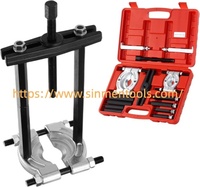
Industrial maintenance requires dependable tools that simplify equipment servicing while protecting surrounding mechanical assemblies, and Gear Puller has become an important solution for controlled component removal in a wide variety of maintenance environments. Reliable manufacturing is achieved through the combination of practical engineering, precision processing, organized production management, and continuous technical refinement rather than relying on individual manufacturing stages alone. Taizhou Xinming Technology Co., Ltd. continues to strengthen its manufacturing capabilities by developing maintenance tools that balance operational reliability with practical usability across diverse industrial applications.
The basic function of a gear puller is to generate stable and controlled pulling force while minimizing unnecessary impact on nearby mechanical parts. A carefully designed structure allows maintenance personnel to perform disassembly tasks smoothly while maintaining better operational control throughout the servicing process. Product development begins with detailed consideration of material characteristics, structural balance, manufacturing efficiency, and ease of operation. These design principles help create tools that remain reliable under different maintenance conditions while improving overall working efficiency.
Modern maintenance environments demand versatile tools capable of adapting to different servicing requirements. Gear pullers are commonly used for machinery maintenance, equipment overhaul, workshop repair, production line servicing, mechanical assembly adjustment, and routine inspection work. Although every application presents different operational challenges, users consistently prefer tools that provide dependable performance together with convenient handling. Flexible manufacturing systems allow production teams to accommodate varying customer requirements while maintaining stable manufacturing quality throughout every production cycle.
Reliable manufacturing begins with disciplined production organization. Material inspection, precision machining, component forming, assembly coordination, finishing treatment, functional verification, and packaging are connected through an organized production workflow. Every manufacturing activity contributes to the quality of the completed tool, making production coordination an essential part of manufacturing success. Well-managed production processes improve operational efficiency while reducing unnecessary variation between manufacturing stages.
Continuous technical innovation helps manufacturers improve production capability through practical optimization. Engineering teams regularly evaluate machining procedures, assembly methods, production workflows, and inspection practices to strengthen manufacturing consistency. Rather than increasing manufacturing complexity, technical improvements focus on refining proven production techniques that enhance operational stability and manufacturing flexibility. Cooperation between engineering personnel and production specialists also encourages continuous process improvement while supporting dependable product quality.
Product performance depends on disciplined quality management throughout every stage of manufacturing. Incoming materials, machining accuracy, assembly quality, production conditions, finishing procedures, and completed tools all receive structured inspection before delivery. Preventive quality management allows manufacturers to monitor production continuously rather than depending only on final inspection. This approach supports early identification of manufacturing variation, allowing timely process adjustments that preserve consistent product quality across different production requirements.
Precision machining directly influences the operational characteristics of maintenance tools. Carefully controlled processing methods help maintain structural consistency, reliable assembly quality, and smooth mechanical movement. Accurate manufacturing also improves the interaction between working components, allowing maintenance operations to proceed with greater stability and confidence. Attention to manufacturing details supports practical usability while helping tools maintain dependable performance during repeated industrial servicing tasks.
Routine maintenance is equally important after the tool enters daily operation. Regular cleaning helps remove accumulated dirt and residue that may interfere with smooth movement during future maintenance work. Periodic inspections allow users to recognize normal wear before it affects operating performance. Appropriate storage practices help preserve important working surfaces and maintain readiness for future applications. Practical maintenance habits contribute to dependable long-term tool management while supporting efficient workshop operations.
Proper application techniques further improve maintenance efficiency. Selecting the appropriate operating position, applying balanced pulling force, and preparing equipment before disassembly all contribute to smoother servicing procedures. Product designers also consider ergonomic handling, assembly convenience, servicing accessibility, and maintenance practicality throughout the development process. This manufacturing-oriented engineering philosophy supports efficient operation while improving user experience across different maintenance environments.
Industrial maintenance continues to develop as equipment becomes more diverse and servicing expectations continue to evolve. Manufacturers therefore focus on improving production management, engineering capability, machining quality, and manufacturing consistency while maintaining practical product design. Taizhou Xinming Technology Co., Ltd. continues to optimize its manufacturing processes through disciplined quality management, continuous technical improvement, and practical engineering, providing reliable maintenance tools for a broad range of industrial applications. More information about the company's manufacturing capabilities and product portfolio can be found at https://www.sinmentools.com/.