
Precision Material Design in Automotive Lamp Tooling
-
Posted by rxmolds rxmolds - Filed in Other - #material science #OEM mold #automotive lighting #injection molding #optical engineering #CNC machining #thermal control #precision tooling - 20 views
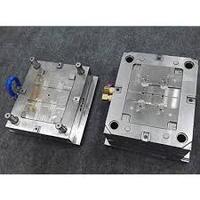
In the automotive lighting industry, customization and precision engineering are essential for meeting diverse vehicle design requirements where the OEM Automotive Lamp Mold serves as a core manufacturing solution that connects product design concepts with large-scale production capability. As lighting systems evolve toward more complex optical structures and thinner visual profiles, OEM tooling must provide both high flexibility and structural reliability. This requires integration of advanced material selection, thermal control engineering, and high-precision machining processes to ensure consistent performance under continuous production conditions. The mold not only defines component shape but also directly influences optical behavior and light distribution efficiency in final automotive assemblies.
Material engineering plays a fundamental role in OEM mold performance. High-strength alloy steels and advanced tool steels are widely used due to their excellent resistance to wear, thermal fatigue, and deformation during repetitive injection cycles. These materials maintain dimensional stability over long production periods while preserving fine cavity details. Surface treatment processes such as mirror polishing, nitriding, and heat hardening improve both durability and optical quality. A precisely engineered cavity surface ensures uniform light transmission and reduces defects such as haze, distortion, or uneven brightness across the lens surface. Thermal conductivity balance is equally important, as it affects cooling efficiency and cycle time stability in high-volume manufacturing environments.
Optical performance in OEM molds is achieved through carefully designed micro-textured cavity surfaces. These micro-structures control how light propagates through the lens, ensuring uniform brightness distribution and eliminating glare or hotspots. Simulation tools are widely used to analyze optical behavior before physical production begins, reducing development time and improving design accuracy. Thermal stability systems integrated within mold structures maintain consistent temperature distribution, preventing shrinkage variation and structural deformation during injection cycles. Cooling channel optimization ensures efficient heat removal, which is essential for maintaining stable production conditions in complex lighting geometries.
Advanced machining technologies such as CNC milling and EDM processing enable the production of highly detailed mold structures with tight dimensional tolerances. These technologies ensure repeatability across large production batches and support complex geometric requirements in modern automotive lighting systems. Quality inspection systems, including coordinate measurement machines and 3D scanning, verify dimensional accuracy throughout manufacturing stages. Automation improves consistency, reduces manual variation, and increases overall production efficiency. Surface finishing is a critical step, as even microscopic imperfections can impact final optical performance.
Lifecycle optimization ensures long-term stability and efficiency in OEM mold systems. Predictive maintenance strategies allow engineers to monitor wear patterns and adjust servicing schedules based on real production data. Continuous feedback from manufacturing environments is used to refine mold design and improve future performance. In this context, the OEM Automotive Lamp Mold represents a highly engineered solution that combines precision, durability, and adaptability for modern automotive lighting production. Taizhou Renxin Mould Co., Ltd. provides advanced OEM tooling solutions and engineering expertise, with more technical resources available at https://www.rxmolds.com supporting global automotive lighting innovation.